Legacy & Transition
Midgrade Transition Tips
Our guest blog post was written by Lieutenant Colonel Daniel Gomez, CEO of First Person Xperience LLC, an education and training company focused on teaching Creativity, Adaptability, and Human Dynamics to National Defense Professionals. Gomez currently serves in the US Army Reserve as the Commander of the 384th Military Police Battalion. During his twenty years…
Read More >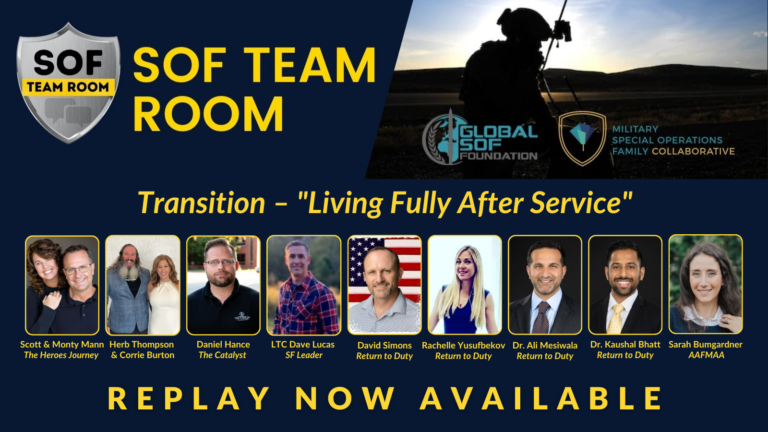
A Candid SOF Team Room Community Conversation on Military Transition
The replay is now available for the SOF Team Room virtual community conversation on military transition that took place on July 13th, 2023. Thank you so much to all of the incredible speakers and experts who took the time to share their wisdom with us! If you attended the event, please give us your feedback…
Read More >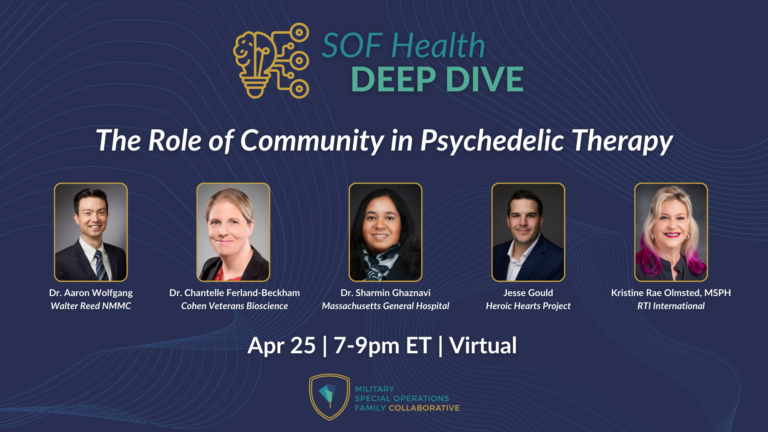
The Role of Community in Psychedelic-Assisted Therapy for Special Ops
On April 25th, 2023, the Military Special Operations Family Collaborative hosted a SOF Health Deep Dive live Q&A with several experts (jump to experts) on these important questions surrounding psychedelic-assisted therapy for special operations community members: Please share this page widely with any special ops service members, veterans, family members, and providers in your networks…
Read More >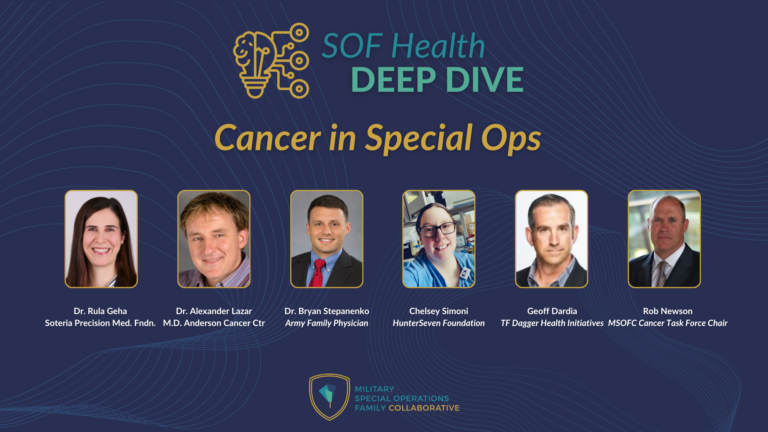
SOF Health Deep Dive: Cancer in SOF
On December 19th, 2022, we hosted a live Q&A with several experts (jump to experts) leading the way to understand cancer trends in the special operations community – several of whom are cancer survivors themselves. We heard from a SOF spouse who shared her moving story about losing her husband to cancer, and also spoke…
Read More >
SOF Health Deep Dive: Traumatic Brain Injury
If you tuned into our SOF Health Deep Dive on September 19, 2022, you participated in a discussion that was specifically built around community health and well-being questions and concerns. Dr. Jason Mihalik of the Transforming Health & Resilience in Veterans (THRIVE) Program thoughtfully put together an all-star team for this Deep Dive on mild…
Read More >
SOF Health Deep Dive: High Allostatic Load (AKA “Operator Syndrome”)
Following every SOF Team Room, MSOF hosts a Health Deep Dive event to more fully cover the meaty topics that are on the minds of many of us in the Special Operations Community. Check out the replay to join our moderator SGM (Ret) Erick Miyares, Dr. Chris Frueh, Dr. Chris Fowler, and Dr. Bryan Stepanenko…
Read More >
SOF Team Room: Transition – Replays & Resources
*More SOF Team Room resources to be added, so check back!* May is Mental Health Awareness Month and a busy time of transition for many of us. Transitions of all types are hard because they bring new tedious tasks and change our expectations, habits, and routines. The transition from service is likely the most challenging…
Read More >
Special Operations Families & Setting Goals
Printable MSOF Quick Guide on Goal-Setting Special Operations families often struggle to know and pursue their own interests because of persistent routine change brought on by repeated deployments, training, and moves. When you set goals, you are more likely to manage stress better, pursue your interests and establish lifelong friendships. Military life can make these…
Read More >
Resources on Stellate Ganglion Block and Psychedelic Medicine for the Special Operations Community
The SOF Health Deep Dive was a Success Thank you to the health experts, participants, and moderators who made our first-ever SOF Health Deep Dive virtual event a success. Full of reliable information, audience Q&A, and a few spontaneous testimonials, the replay below is a must-view for any member of the Special Ops community wondering…
Read More >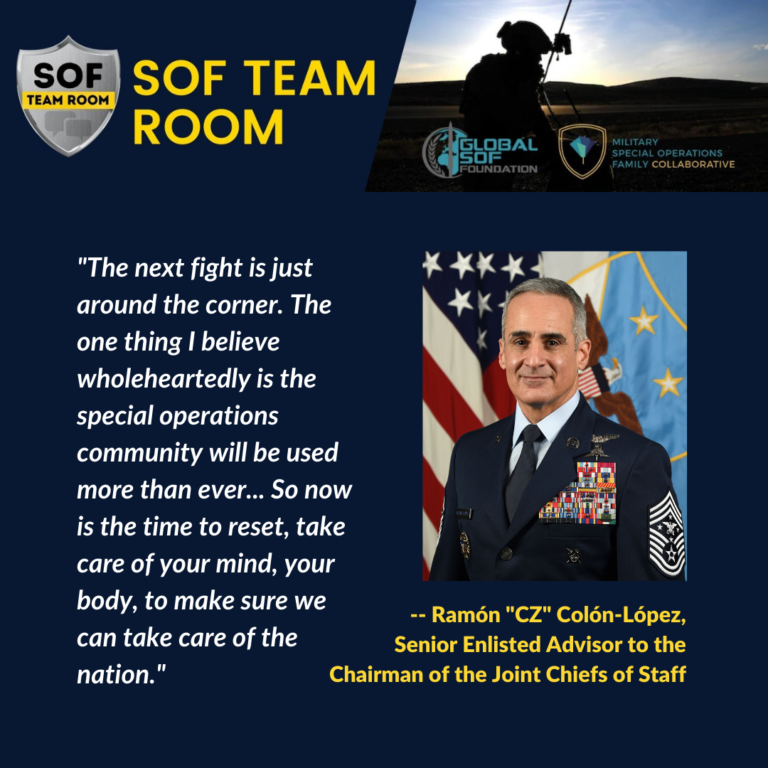
It’s Back and Here to Stay – SOF Team Room
Born of the need for open, honest conversation on the impact of 20 years of the Global War on Terror and the Afghanistan withdrawal felt by the special ops community, the Military Special Operations Family Collaborative teamed up with the Global SOF Foundation to develop a virtual space akin to the team room atmosphere well…
Read More >